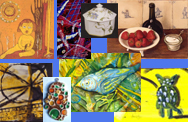


Enamels on Glass
Some years ago I started enamelling on glass. This came about because of three non-related things that happened.
During one of my solo batik exhibitions a couple came to see me and they said that they’d like to ask me a question. They asked me not to laugh at them, because they realized that the question was quite ridiculous…For me, however, the question was not ridiculous at all, for it opened up a totally new field of interest. The queston was: would I be willing to trade one of my batiks for a pottery kiln that could also be used for glass fusing? The deal was made and the pottery kiln duly arrived.
Some time later the artist group of which I am a member was offered a new studio complex. It was a former school building and the Dutch equivalent of the National Trust offered to renovate it for us, to make it suitable for use by artists. During the renovation a lot of the old glass doors were replaced and the old glass was taken away for recycling. I asked if I might keep some of the glass for use in art projects, and when permission was granted I enrolled in a course for beginning glass workers. It was there that I made my first glass bowls and other objects. (Click on the photograph to enlarge.)
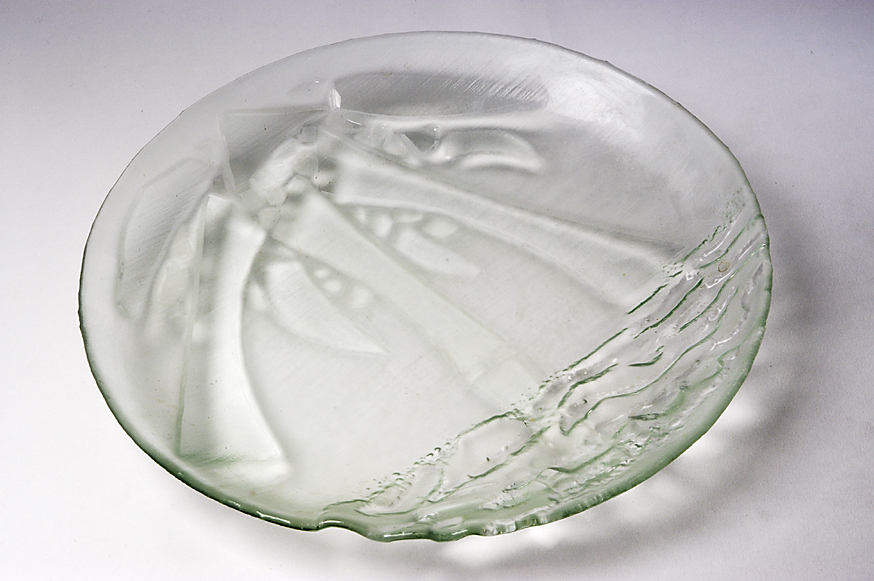
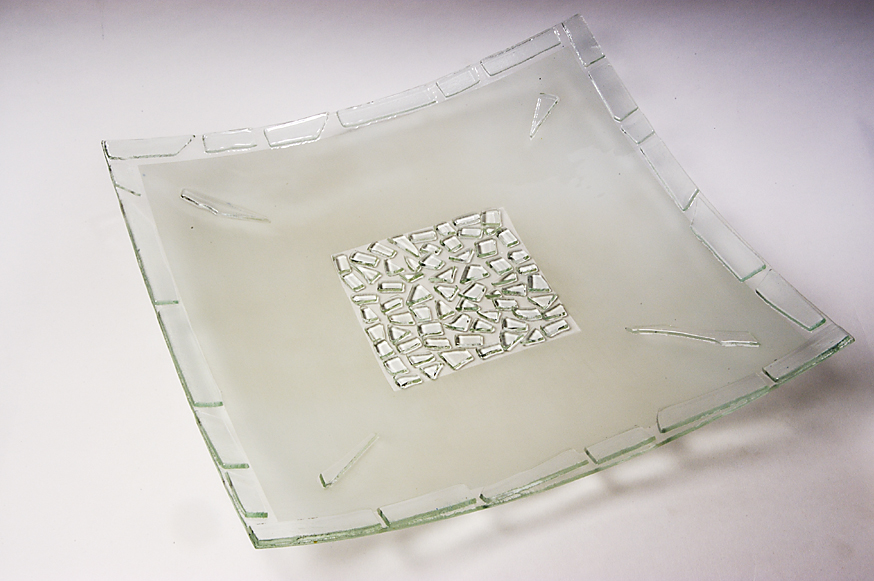
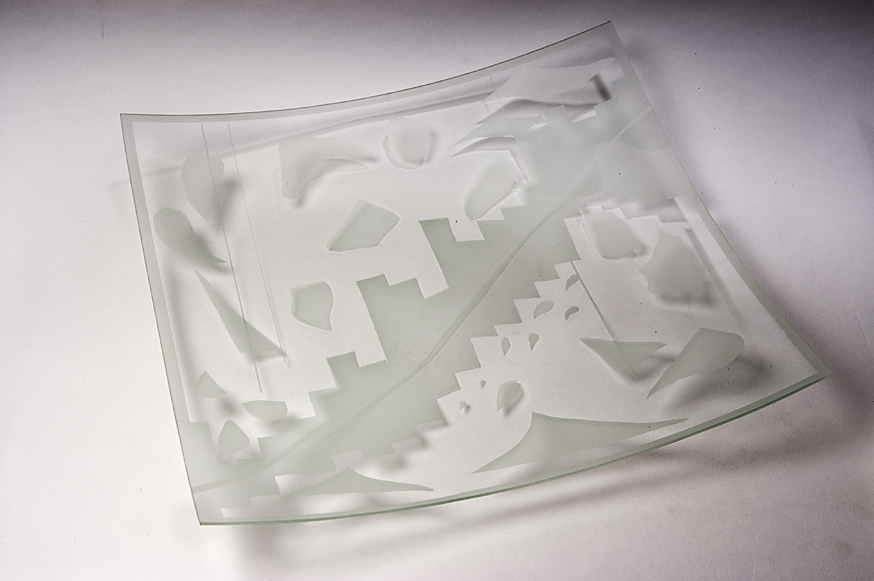
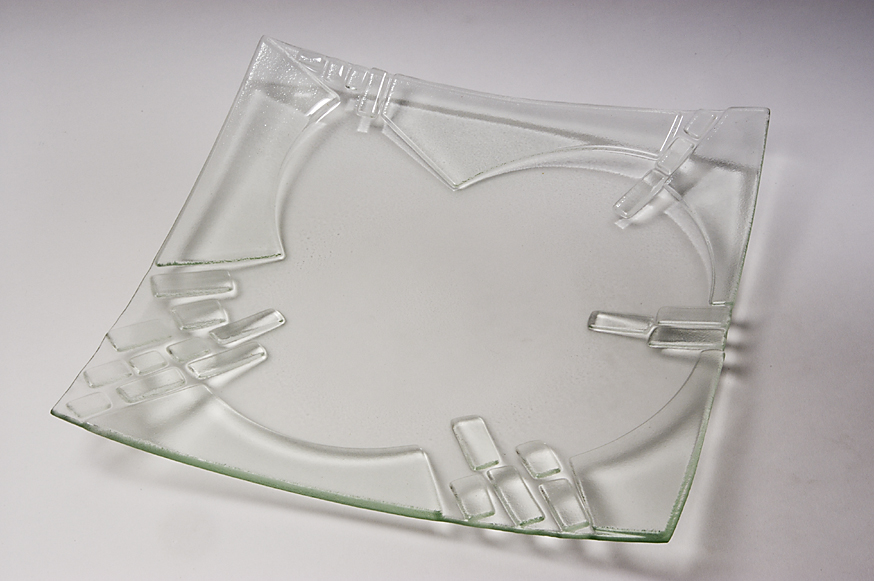
After a while I began to miss the beautiful colours of the enamelling powders I had been using on my metal work and I started to colour my glass work with the glass paints available at the course. Alas, I was not impressed.

- painted glass
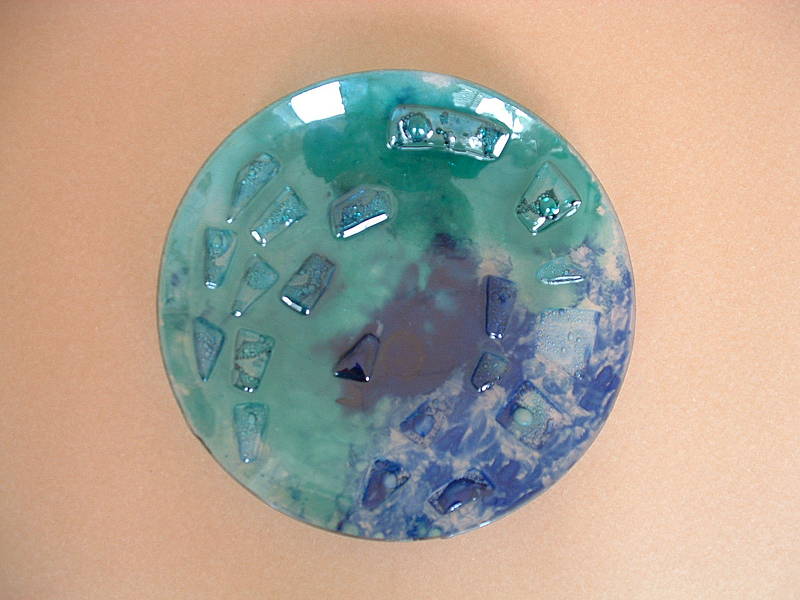
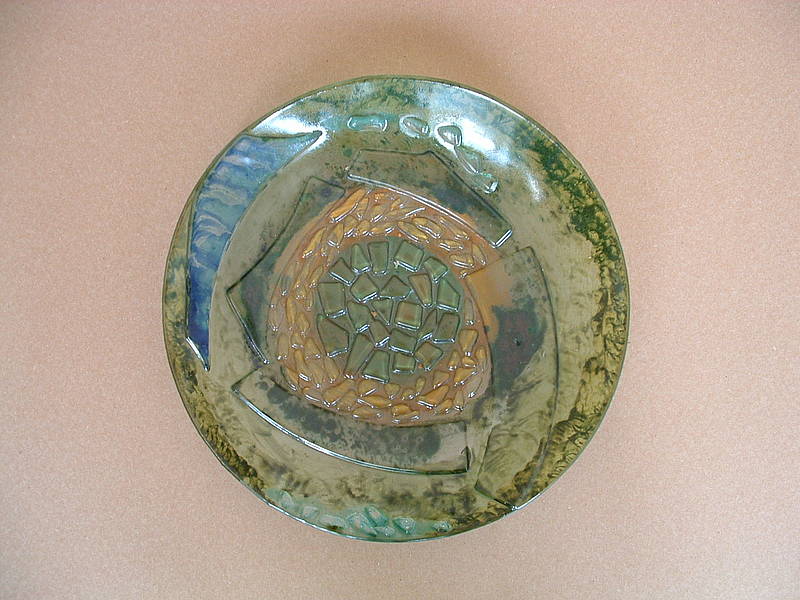
I wrote to the factory where I bought my enamels, asking them if they knew an address where I might buy special enamels for glass. I did not have to worry: the Thompson enamel factory had a special line for products for use on glass. Samples duly arrived and I was impressed! The colours were as bright and beautiful as the enamels I had been using for enamelling on metal.
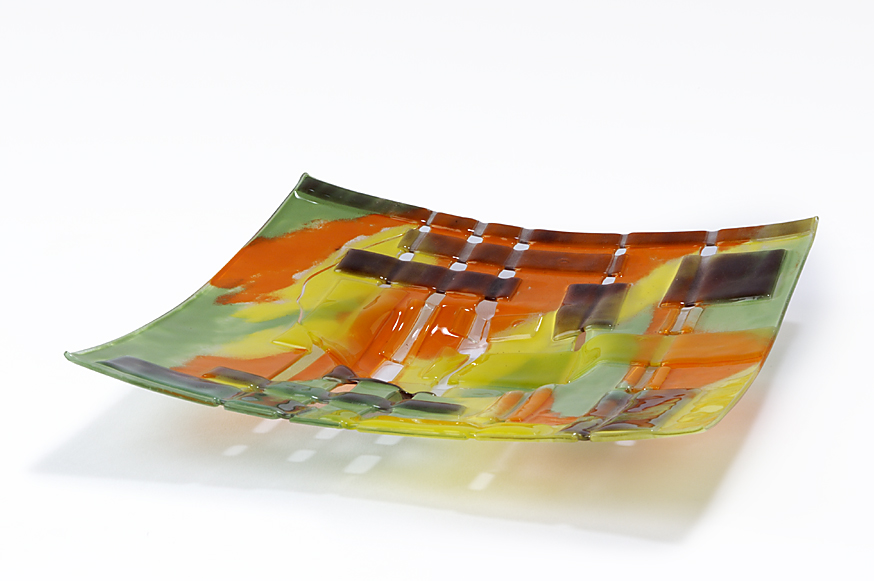
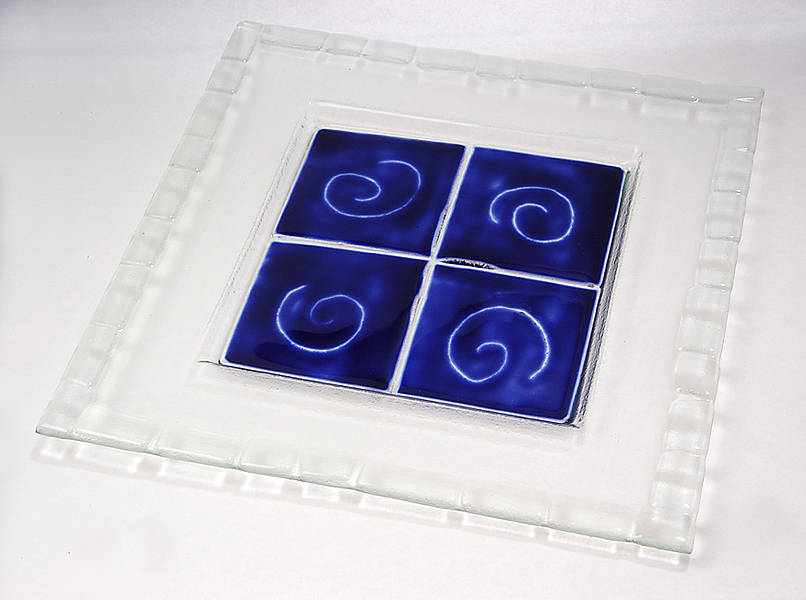
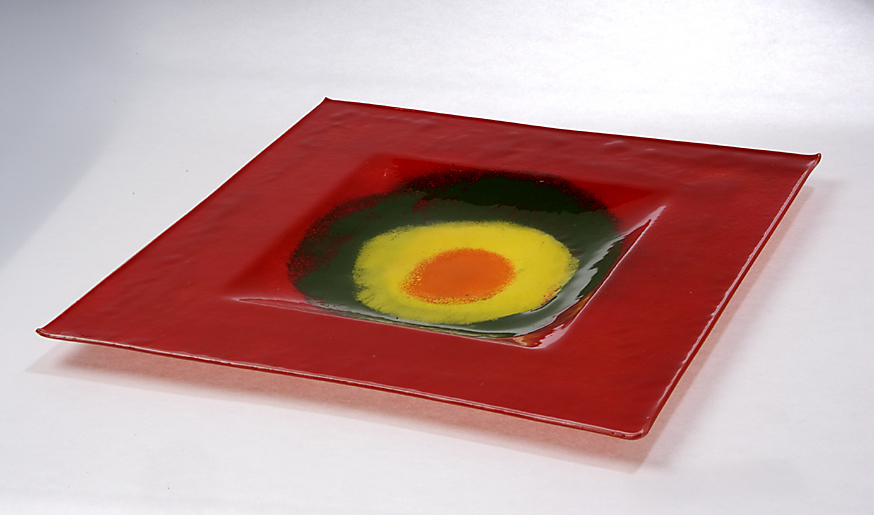
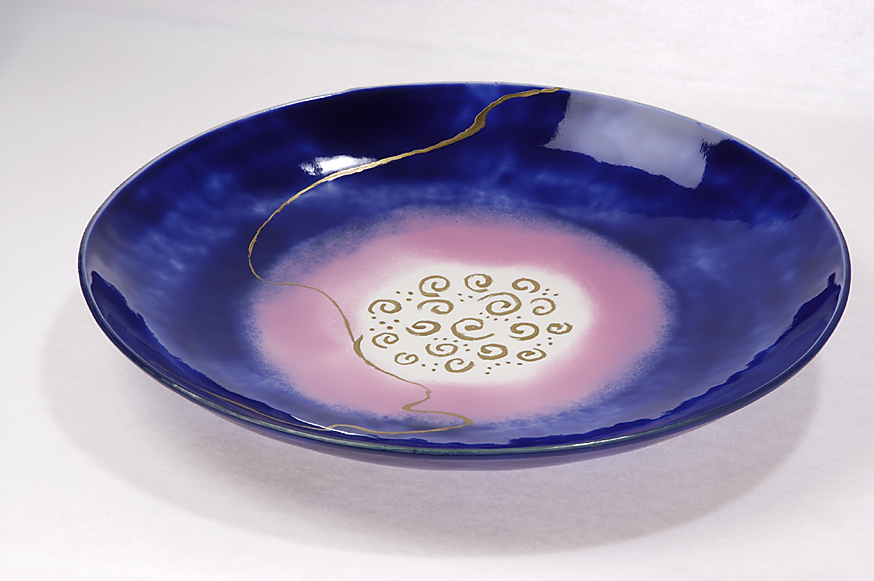
- enamelled glass
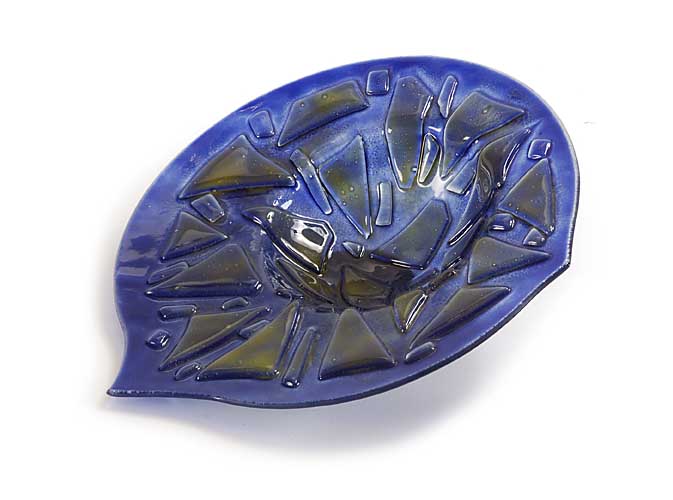
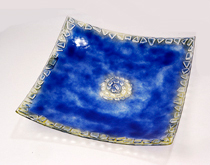
There were some other difficulties I had to overcome: The main one was that I now had to deal with annealing. I found the answers to my difficulties in a slpendid book, written by Brad Walker and entitled: Contemporary Glass. You will find a review on this book here.
Glass artists who are interested in knowing which Thompson enamels are suitable for their work may find information, click here.